7 Warning Signs Your Roof Is Failing (And How to Spot Them Early)
Your roof is the first line of defense against the unpredictable Georgia weather. Shingles take a beating year-round from sudden summer thunderstorms and the heavy humidity that settles over Fulton County. As a licensed residential and commercial roofing contractor serving the greater Atlanta metro area, including East Point, Stone Mountain, and Tucker, we see firsthand how local conditions impact home longevity.
Most homeowners do not think about their roof until a ceiling stain appears. By that time, the damage is often extensive and expensive to fix. Learning to spot the early warning signs can save you thousands in structural repairs. If you notice any of the following issues, it is time to consult with a roof repair specialist like Pineapple Express Roofing in East Point to protect your home's integrity.
The Most Common Signs of Roof Damage
Identifying roof issues early requires a mix of ground-level observation and attic-level investigation. You do not necessarily need to climb a ladder to see that something is wrong. Often, the most telling signs are visible from your driveway or inside your home.
1. Curled, Cracked, or Missing Shingles
Shingles should lie flat against the roof deck. They can begin to curl upward or lose their flexibility and crack as they age or suffer from extreme heat. High wind gusts in the Atlanta area can also peel shingles back entirely. If you see "bald spots" on your roof where the underlayment is exposed, your home is vulnerable to immediate water penetration.
Curled shingles create a lip that allows wind to get underneath the material. This creates a sail effect where the next storm can easily rip off entire sections of your roof. Cracking is often a sign of aging where the oils in the asphalt have evaporated. This leaves the shingle brittle and useless against rain.
2. Granule Loss in the Gutters
You may notice coarse black sand in your gutters or at the end of your downspouts. These are granules, which are the protective outer layer of asphalt shingles. An abundance of granules means your shingles are losing their UV protection and becoming brittle. According to the National Roofing Contractors Association (NRCA), this is a primary indicator that the roof is nearing the end of its functional life.
Granules act as sunscreen for your home. Without them, the sun's harsh rays bake the asphalt and cause it to dry out prematurely. If you can see the shiny fiberglass matting underneath the granules, the shingle has effectively failed and will no longer shed water correctly.
3. Damaged or Rusted Flashing
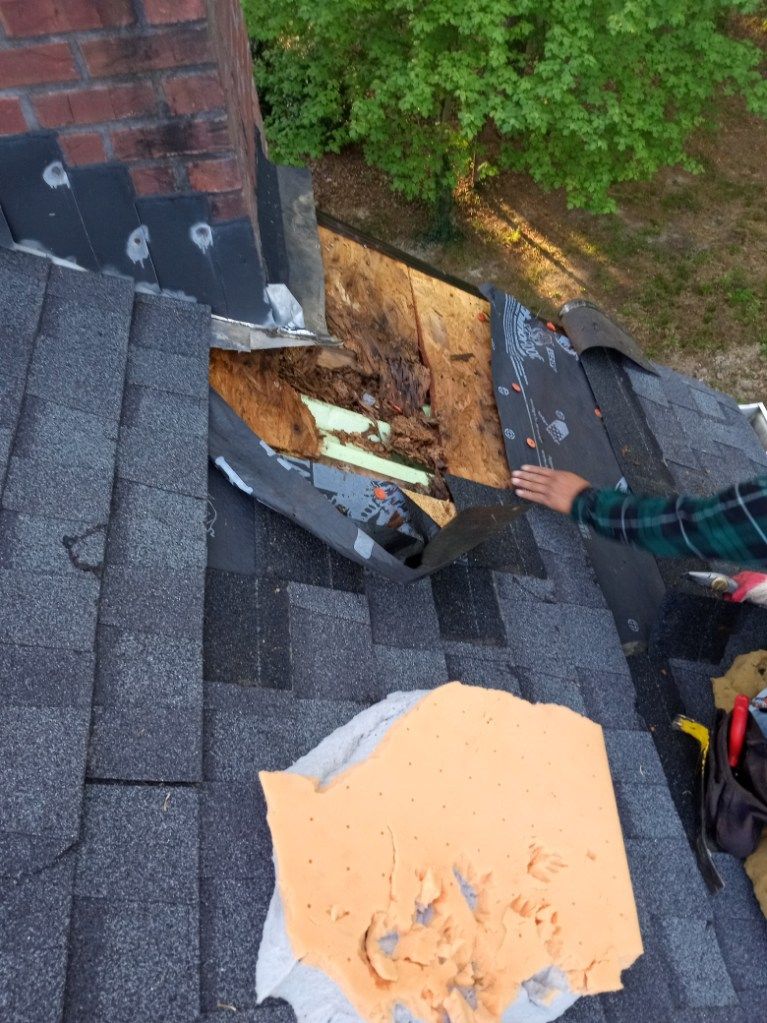
Flashing is the metal material installed around chimneys, vents, and skylights to redirect water away from seams. Water will find its way into the most sensitive parts of your home's structure if the flashing is cracked, rusted, or pulling away. Modern roofing standards recommend replacing older tar or cement flashing with durable metal systems to prevent long-term leaks.
Why Georgia Weather Accelerates Roof Wear
The climate in the Atlanta metro area presents unique challenges for roofing materials. The combination of intense UV exposure and rapid temperature shifts causes materials to expand and contract frequently. This process is known as thermal shock.
The Impact of Humidity and Algae
High humidity levels lead to the growth of algae and moss. Moss is often viewed as a cosmetic issue, but it actually traps moisture against the shingles. This leads to rot in the underlying wood deck. If you see dark streaks or green patches, it is a sign that moisture is lingering on your roof longer than it should.
Moss acts like a sponge by holding water against the roof surface. In the winter, this water can freeze and expand. This pries the shingles away from the deck and is one of the fastest ways to destroy a roof in the Southeast.
Storm Damage and Pine Needles
Our service areas from Stone Mountain to East Point are known for their beautiful canopy. However, those trees can be a roof's worst enemy. Falling branches during storms cause obvious impact damage. The accumulation of pine needles in roof valleys is also a hidden killer. These needles trap moisture and acidic debris which can eat through shingle layers over time.
Pine needles can also clog your gutter system. When gutters overflow, water backs up under the eave of the roof. This leads to fascia rot and mold growth inside your walls. Regular gutter cleaning is a non-negotiable part of roof health in Georgia.
Interior Signs You Should Not Ignore
Sometimes the best roof inspection happens inside the house. During the next heavy rain, take a flashlight into your attic or check your upper-floor ceilings for these subtle clues.
Water Stains and Mold
A yellow, brown, or grey ring on your ceiling is a definitive sign of a leak. Mold growth in the attic or a sudden musty smell can also indicate that your roof ventilation is failing. Proper airflow is essential to prevent moisture buildup. Without it, the safety of your home's air quality could be at risk.
Sagging Roof Deck
This is a structural emergency if you notice the ceiling or the roofline from the outside looks wavy or depressed. Sagging usually indicates that the decking has been soaked through and is no longer strong enough to support the weight of the shingles. This often requires professional intervention rather than just a patch.
The Homeowner's Ground-Level Inspection Checklist
You do not need to be a professional to perform a basic safety check. Use this checklist once a quarter to stay ahead of potential disasters.
- Use binoculars to look at the ridges and valleys of your roof for shingles that are standing up or missing.
- Look at the edges of your roof to see if the metal drip edge is secure or sagging.
- Check the chimney for cracks in the mortar or gaps in the metal flashing where it meets the brick.
- Look for nail "pops" where nails push the shingle above them upward and create entry points for water.
The Hidden Costs of Delaying Roof Repairs
Many homeowners wait until they see a drip to call an East Point roof repair contractor. Unfortunately, the water has likely already traveled through your insulation and rotted your rafters by the time you see a drip.
Structural Integrity
Water is heavy. Your roof deck becomes heavy and soft when it absorbs water. This can lead to a partial roof collapse during a heavy Georgia snow or ice storm. Replacing a few shingles is inexpensive, but replacing a collapsed roof deck and the interior ceiling is a major financial burden.
Energy Efficiency
A damaged roof often means damaged insulation. Wet insulation loses its R-value. This means your air conditioner has to work twice as hard to keep your home cool in July. According to Energy.gov, proper roof maintenance and attic ventilation are critical factors in maintaining home energy efficiency and reducing cooling costs.
Conclusion: Protecting Your Investment
Your roof is a complex system designed to keep your family safe and dry. By catching these seven warning signs early, you can avoid the stress and expense of a total roof collapse or major interior mold remediation.
Regular maintenance is the key to longevity. If you have spotted any of these red flags, or if your roof is more than 15 years old, it is time to seek expert advice. For reliable, high-quality roof repair in East Point, contact the team at Pineapple Express Roofing to ensure your home remains your sanctuary.