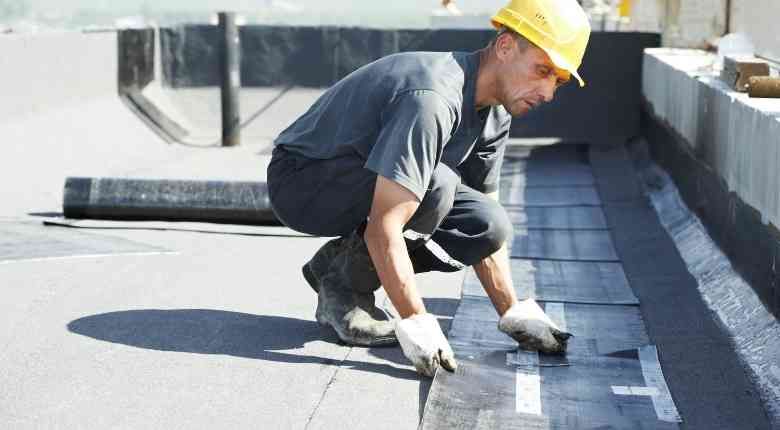
Roof Repair or Full Replacement? What East Point Homeowners Should Know Before Deciding

The estimate is sitting in your email. One contractor says repair. Another says replace. The numbers are different, the reasoning sounds plausible from both sides, and you are the one who has to make a call that affects your home for the next decade or longer.
This is the decision that roof repairs or replacements ultimately come down to, and it is more nuanced than most homeowners get told.
The 30% Rule — Why Roofing Contractors Use It and What It Actually Means

Most experienced roofing contractors apply a working threshold: when damaged or deteriorated shingles cover 30% or more of a roof's total surface area, replacement tends to make more long-term sense than repair.
The reasoning is structural. Patching one section of a roof that has widespread wear does not restore the system, but addresses one failure point while others continue aging underneath.
Where this gets complicated is in how "surface area" gets measured. Homeowners typically picture what they can see from the street. Contractors are counting squares, like 100 square feet per roofing square, and assessing slope, pitch, exposure, and valley concentrations that are invisible from ground level.
Two contractors measuring the same roof can reach different coverage percentages depending on methodology, which is one reason competing estimates sometimes diverge more than the price alone explains.
The 30% rule is a starting point, not a verdict. A roof with 28% damage concentrated around a single valley and compromised flashing may be a stronger replacement candidate than a roof with 35% damage spread across low-stress flat sections.
Percentage matters.
Location and type of damage matter more.
How Roof Age Affects the Repair Decision More Than Most People Realize
Asphalt shingles, the material on the majority of residential roofs in the Atlanta metro, carry a rated lifespan of 20 to 30 years under typical conditions. Georgia's conditions are not typical. Summer heat cycles cause shingles to expand and contract at a higher frequency than cooler climates, UV exposure accelerates granule loss, and humidity creates moisture stress that northern climate ratings do not account for.
Realistically, East Point homeowners are working with 18 to 22 years on standard 3-tab shingles, slightly longer on architectural grades.
A repair on an 8-year-old roof is a straightforward decision when the damage is localized. The same repair on a 20-year-old roof is a different financial situation entirely. The remaining service life shrinks, the surrounding shingles are already brittle and granule-depleted, and the repaired section will likely outlast the rest of the roof by only a few years.
That is not an argument against the repair. Sometimes a bridge solution is exactly right. It is an argument for understanding what you are actually buying.
What the 50% Cost Rule Means for Older Roofs
The 50% threshold is widely used in the roofing industry: when the cost of repair approaches or exceeds half the cost of full replacement, replacement is generally the better investment. On an older roof, the math becomes harder to avoid.
A $4,500 repair quote on a roof where full replacement runs $10,000 puts the homeowner close to that threshold, and does not include any future repair costs on the remaining aging sections.
Explore roof replacement services to understand what full replacement involves for Atlanta-area homes before assuming repair is the default lower-cost option. The gap between the two is often smaller than the initial estimate suggests, particularly when energy efficiency improvements from modern materials are factored in.

Storm Damage in Georgia Changes the Equation — Here Is Why
Georgia sits in a high-frequency hail and wind corridor. The Atlanta metro averages multiple significant hail events annually, and East Point's position in Fulton County puts it in a region where insurance carriers have well-established claim patterns for roofing. When storm damage is the cause of the problem, not age, not deferred maintenance, the repair-or-replace decision does not belong entirely to the homeowner. Insurance adjusters assess roof damage against policy terms, carrier guidelines, and the roof's pre-storm condition. A roof with documented storm damage to its structural integrity may qualify for full replacement coverage even when the visible surface damage appears limited. Carriers sometimes approve replacement on roofs that homeowners assumed they would only get partial repair coverage on.
What Georgia Homeowners Should Document Before Filing a Claim
Documentation timing matters more than most homeowners realize.
Photograph the damage within 24 to 48 hours of the storm event. Date-stamped photos carry more weight in an adjuster review than photos taken two weeks later. Interior evidence matters too: water stains, ceiling bubbling, and attic moisture should be photographed alongside exterior damage.
Georgia's statute of limitations on roof insurance claims is typically one year from the date of loss. Homeowners who wait beyond that window lose standing to file, regardless of the damage's legitimacy
When Insurance Pays for Replacement, Even If You Only Wanted a Repair
When an adjuster determines that storm damage has compromised a roof's watertight integrity at a systemic level, many carriers approve full replacement rather than partial repair. This happens more often than homeowners expect, particularly on roofs where hail has caused granule loss across multiple sections.
Get the inspection report in writing before accepting any settlement offer. A verbal agreement or a preliminary estimate is not a binding commitment from the carrier, and adjusters occasionally revise the scope downward between the initial visit and the final offer.
The Georgia Department of Insurance publishes
consumer guidance on homeowner claims that is worth reviewing before contacting your carrier.
The Indicators Most Homeowners Miss During a Roof Walkthrough
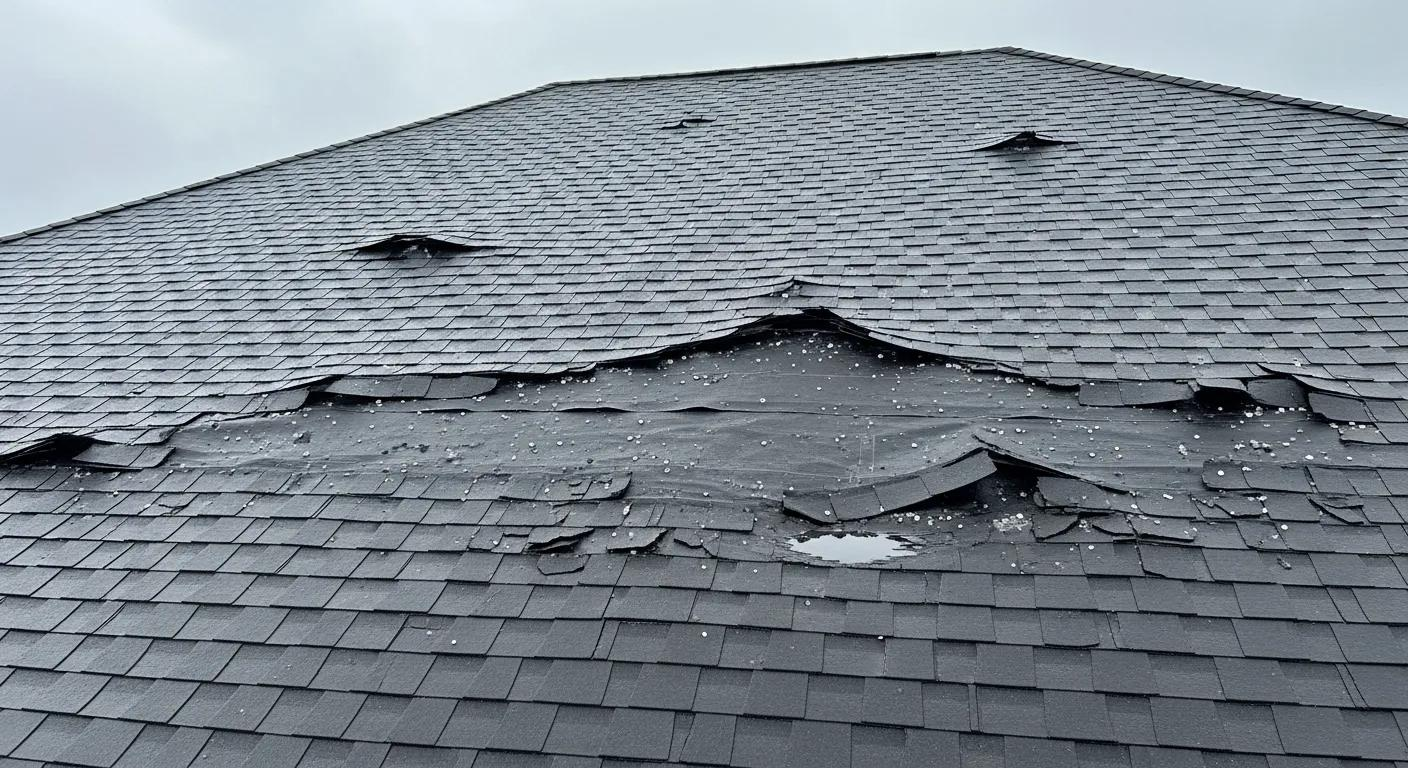
Surface shingles are visible. The deck, underlayment, and flashing are not.
Most homeowners assess roof condition from the ground or from photos a contractor takes during an estimate visit. Neither method shows what is happening at the structural layer, which is where the real repair-or-replace decision lives.
Deck Damage
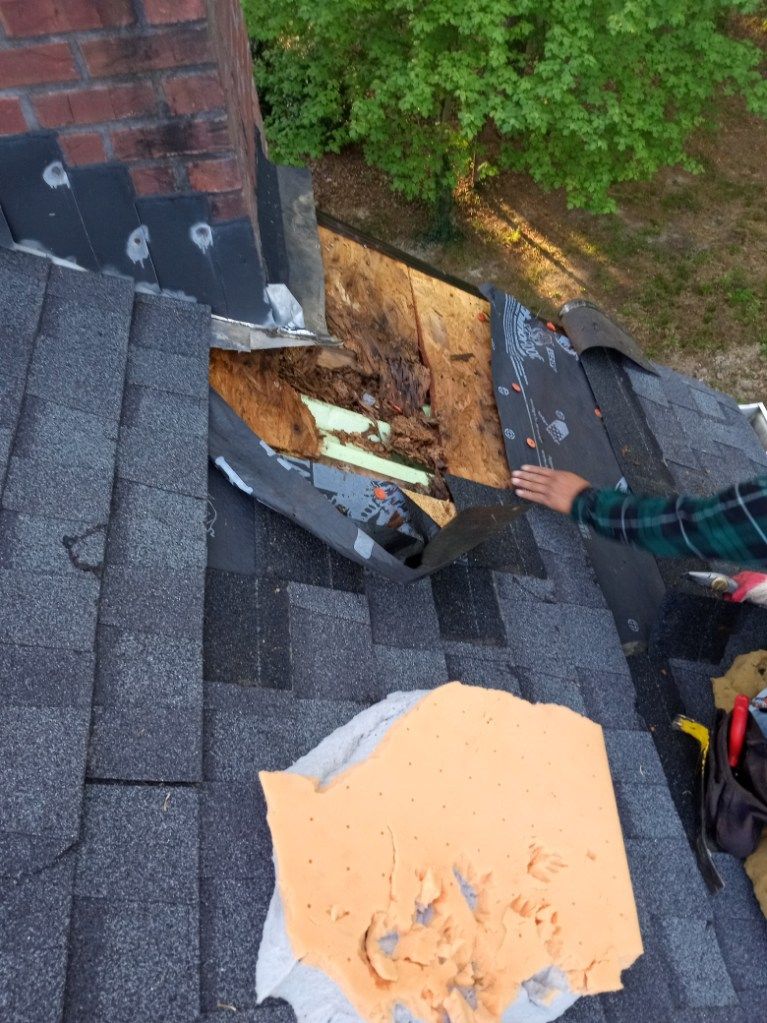
Soft spots, visible sagging from inside the attic, or water-stained decking boards indicate damage that extends below the shingle layer. Roof repair addresses shingles. It does not address compromised decking, and a new shingle layer over damaged decking will fail faster than the material's rated lifespan. When an inspection reveals deck damage, replacement becomes the more honest recommendation.
Flashing Failures
Flashing, the metal strips sealing transitions around chimneys, skylights, pipes, and valleys, tends to fail before shingles do on aging roofs.
A single flashing repair is a routine fix. Repeated flashing failures on a roof that is also showing shingle wear signal something broader: the entire system is reaching the end of its serviceable life, and repairs are cycling through symptoms rather than addressing the underlying condition.
Granule Loss
Granules in the gutters after a storm are one of the more reliable early indicators that a roof is closer to the end of its life than it appears from the street. Granules protect the asphalt mat from UV degradation. Once they are gone from a significant section of the roof, the mat begins breaking down at an accelerated rate.
Most online roof inspection checklists skip this entirely because they are written for general audiences rather than for East Point homeowners dealing with Georgia's specific heat and UV load.

Questions to Ask a Roofing Contractor Before Accepting an Estimate
Ask for the inspection report separately from the estimate. These are not the same document. An estimate is a price. An inspection report is a condition assessment, and the two can tell very different stories about the same roof.
Ask specifically about deck conditions. A contractor who answers "the deck looks fine" without going into the attic has not actually assessed the deck. Ask how they know.
Ask whether the quote includes drip edge, ice and water shield underlayment along the eaves, and permit fees. These are the items that disappear from low bids. They also happen to be the items most relevant to long-term performance and code compliance.
Ask whether the roof has been repaired before and where. A contractor reviewing a roof for the first time can often spot previous patchwork, like mismatched shingles, subtle seam lines, areas with different granule weathering. A history of repairs on the same section is relevant information for the repair-or-replace decision.
A contractor who answers all four questions without hesitation is worth your time.

Conclusion
The repair-or-replace decision does not reduce to a single number or a single rule. Roof age, damage scope, the 30% and 50% thresholds, Georgia's insurance environment, and what the deck and underlayment actually look like underneath: these factors together form an accurate picture. Any one of them alone does not. For East Point homeowners trying to make this call with competing estimates in hand, an independent inspection from a reputable
East Point roof repair contractor is the most reliable next step.
Pineapple Express Roofing
serves homeowners across East Point, Stone Mountain, and the Atlanta metro, and the team fields questions like these regularly, including second opinions on estimates that do not add up.
Reach them at
404-476-8066 or through our
online form to schedule a free inspection before committing to either direction.